
 AI Workforce


Digital Marketing for Salons and Spas: Strategies That Fill Your Books
You don't need a marketing agency or a big budget to grow your salon or spa. You need the right channels, the right tools, and a system that turns one-time visitors into loyal regulars. This guide covers all of it.
Trusted by the fastest-growing salons in the world




























Why Digital Marketing Matters for Salons and Spas
Word of mouth built most successful salons — but it doesn't scale, and it's invisible to the clients who haven't heard of you yet. Digital marketing is how you reach those people: the ones searching for a new colorist after a move, the ones booking a spa day for a birthday, the ones who found you on Instagram and want to know if you're taking new clients.
The beauty industry is also intensely local. Unlike e-commerce, almost every client you market to is within a few miles of your door. That makes digital marketing for salons and spas more targeted — and more achievable — than it is for most business types. The right Google Business Profile alone can drive significant new client traffic without spending a penny on advertising.
The channels in this guide — Google Business Profile, social media, email, and paid search — work together as a system. Each one handles a different stage of the client journey, from initial discovery through to rebooking. You don't need to master all of them at once. Start with the highest-return activities and build from there.
The Digital Marketing Channels That Fill Your Books
Google Business Profile Optimisation
Your Google Business Profile is the most valuable piece of digital real estate your salon or spa owns — and it's completely free. Complete every field, add photos consistently, collect reviews actively, enable booking directly from your profile, and post regular updates. Profiles with strong photo galleries attract significantly more profile views and direction requests than those without.
Social Media Marketing
Instagram remains the primary platform for salon and spa marketing — post finished work consistently, use location tags and relevant hashtags, and use Reels for higher organic reach. TikTok is where the growth is: colour transformations, nail art process videos, and behind-the-scenes content regularly accumulate tens of thousands of views even for accounts with small follower counts. Consistency matters more than production quality.
Email Marketing for Salons
Email is still one of the highest-return marketing channels for salons and spas. The most effective salon email marketing is automated: a rebooking reminder sent 4–6 weeks after a visit, a birthday offer sent 7 days before the client's birthday, a win-back campaign sent to any client who hasn't visited in 60 days. These messages are relevant, timely, and personal — which is why they perform far better than broadcast newsletters.
Google Ads for Salons
Google Ads puts your salon in front of people actively searching for what you offer. The most effective approach for most salons is a tightly targeted local campaign focused on high-intent keywords like "keratin treatment [city]" or "gel nails near me." Your landing page matters as much as your ad — send paid traffic to a specific service page or booking page and make the next step unmistakable.
Google Ads and Landing Page Quality for Salons
For high-intent searches like "balayage salon [city]" or "spa day near me," a well-run paid search campaign can deliver new client bookings at a predictable cost. Budget doesn't need to be large to start — even a modest local budget can generate measurable new client bookings if the targeting and landing page are right.
Tight keyword targeting. Broad, generic keywords like "hair salon" are expensive and competitive. Specific service terms — "keratin treatment [city]," "gel nails near me," "couples spa day [city]" — attract clients who are further along in the decision process and more likely to book.
Landing page quality. A client who clicks your ad and arrives on a slow, generic homepage with no visible "Book Now" button will leave without booking. Send paid traffic to a specific service page or a booking page, and make the next step unmistakable. See the salon website design guide for exactly what a high-converting salon page needs.
Start small and scale. Track cost per booking and scale what works. Most salons see results with a modest, consistent investment rather than a large sporadic one. A reasonable starting point is allocating 5–10% of monthly revenue to marketing.
How Salon Software Powers Your Marketing
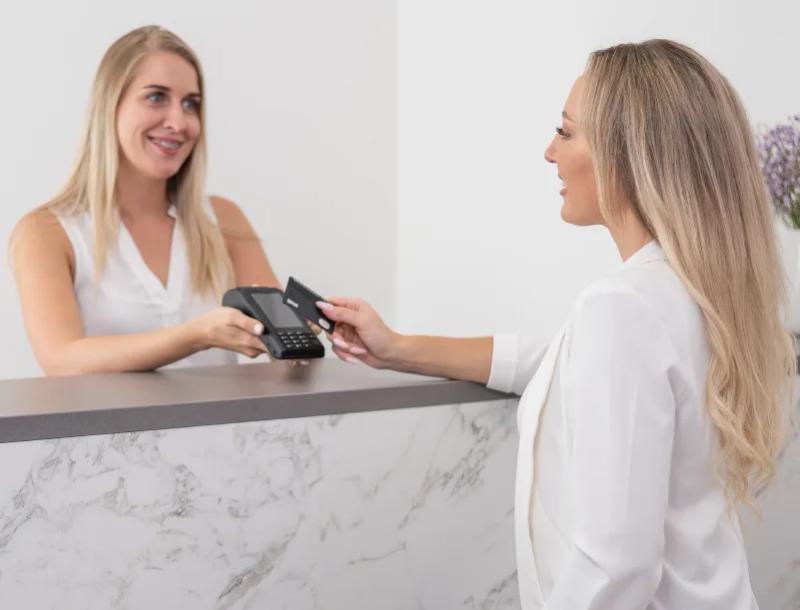
The best marketing strategy in the world is limited by the quality of your client data. If you don't know who your lapsed clients are, you can't send a win-back campaign. If you don't know which clients have birthdays next week, you can't send a birthday offer. If you don't know which clients haven't rebooked after a colour service, you can't send a timely reminder.
This is where salon software and marketing connect. Zenoti's salon CRM captures every visit, purchase, and interaction automatically — building the client data that makes personalised, automated marketing possible. Rebooking reminders fire when a client is due back. Birthday campaigns go out without manual scheduling. Lapsed client campaigns trigger when someone hasn't visited in a defined number of days.
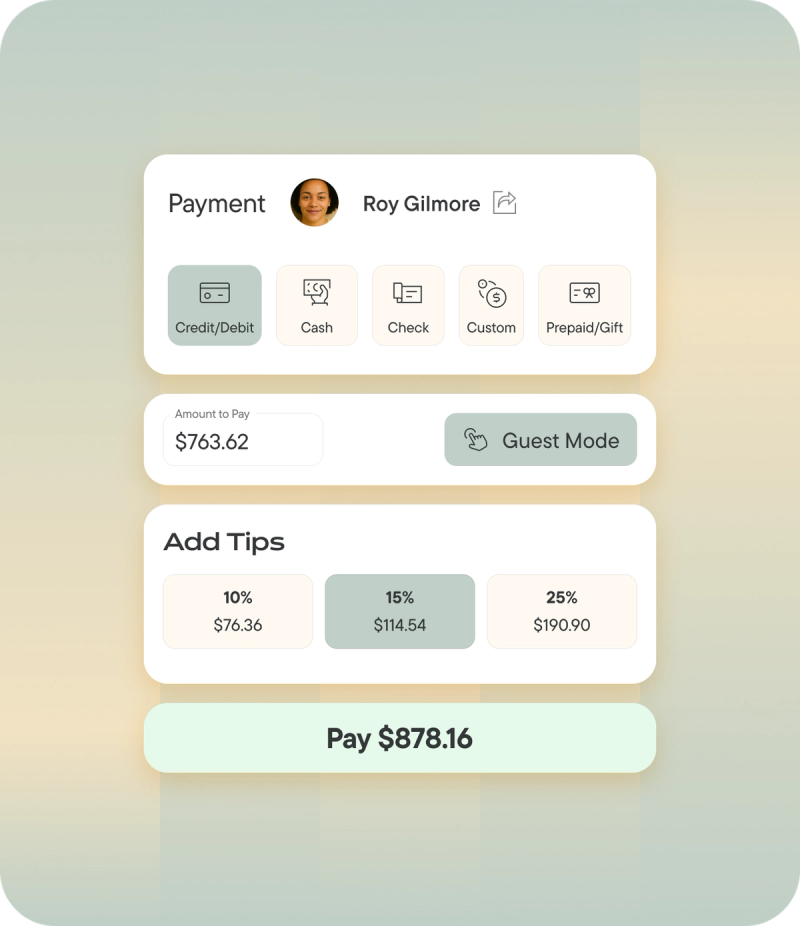
The marketing tools in Zenoti's salon software connect directly to this CRM data — which means you can segment your client list, build targeted campaigns, and automate the follow-ups that keep clients coming back, all from the same platform you use to run your bookings and POS.
For salons and spas that want marketing to work without a dedicated marketing resource, this automation is the difference between a strategy that happens and one that stays on the to-do list.
Frequently Asked Questions
For most salons, the highest-return starting point is a fully optimised Google Business Profile combined with consistent review collection. This drives local search visibility at no cost and converts actively searching clients into bookings. From there, Instagram for brand visibility and automated email campaigns for retention are the next highest-impact investments. Paid advertising with Google Ads becomes worthwhile once your organic presence is established and you have a landing page capable of converting the traffic.
The most reliable way to attract new clients online is to be visible where they're searching. Optimise your Google Business Profile so you appear in local map results, post consistent work on Instagram and TikTok with location tags, and ask every satisfied client for a Google review. For faster results, a targeted Google Ads campaign focused on specific service keywords in your local area can generate new bookings at a predictable cost per client.
Most salons see results with a modest, consistent investment rather than a large sporadic one. A reasonable starting point for a single-location salon is allocating 5–10% of monthly revenue to marketing — covering a small Google Ads budget, any paid social promotion, and the cost of any marketing tools or email platform you use. Many of the highest-return activities — Google Business Profile, organic social, email to your existing client base — cost time rather than money.
Not necessarily, and not as a starting point. Google Ads is most effective when you already have a strong organic presence and a website capable of converting paid traffic. If your Google Business Profile isn't complete, your website is slow, or you don't have a booking system embedded on your landing page, paid ads will underperform until those foundations are in place. Once they are, Google Ads can be a reliable and scalable channel for new client acquisition.
The most effective salon email marketing is automated and behaviour-triggered rather than manually composed. Set up a rebooking reminder that sends automatically 4–6 weeks after a client's last visit, a birthday offer that goes out a week before their birthday, and a win-back campaign that fires when a client hasn't visited in 60 or 90 days. These three automations alone — all running on your existing client data — will outperform any manually scheduled newsletter campaign because they're timely, relevant, and personal.
From hairdresser marketing to marketing salons of every size, Zenoti supports the full range of salon marketing services — campaigns, automation, loyalty, and reporting. For the software that runs it all, see Zenoti’s salon marketing software.